
All Things Must Pass
The ending of Moorish rule in Spain is often seen as progress. It wasn't.

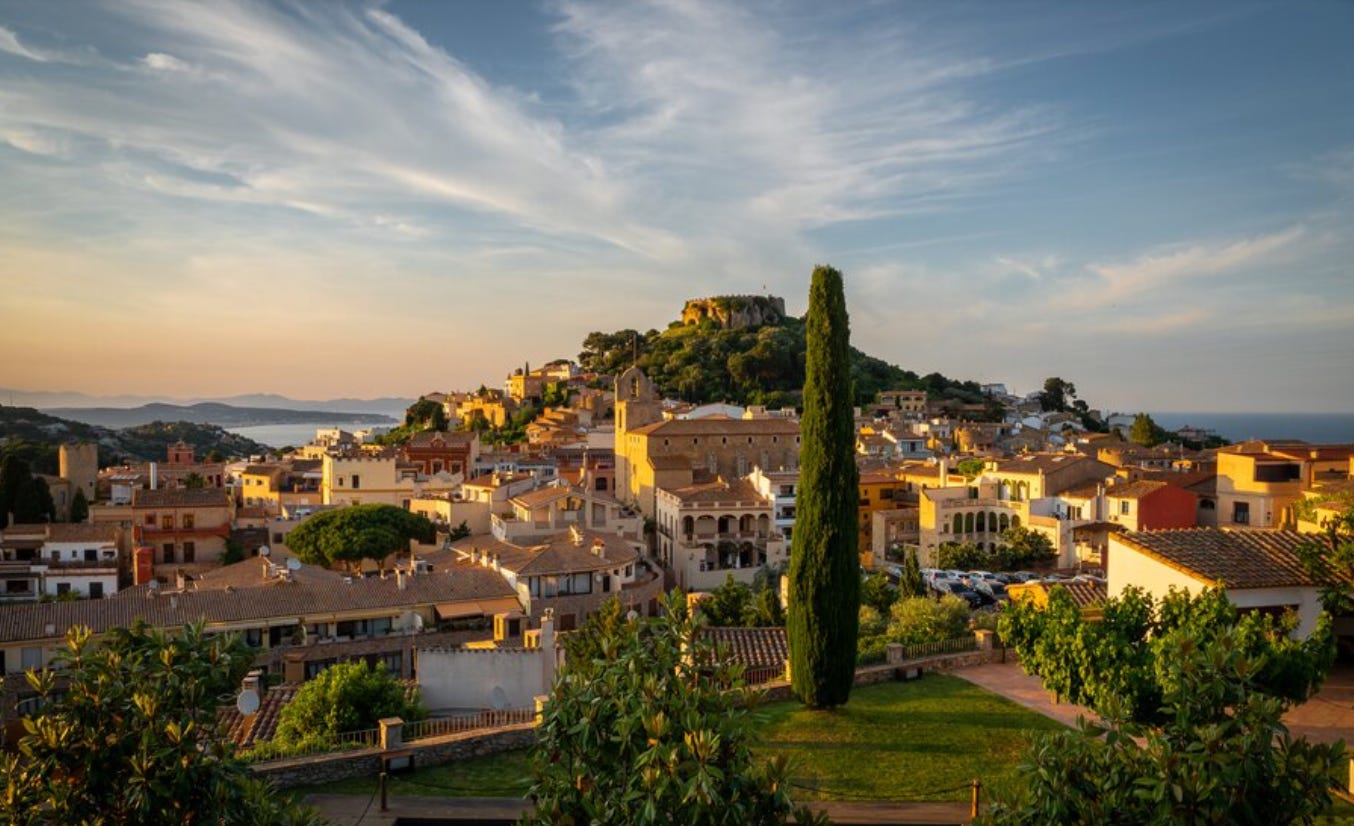
I’m in Spain, or rather Catalonia, at the moment, at our house in Begur. We’ve had the house for twenty-one years; over that time, we’ve watched the town grow lovelier and ourselves grow older. Sublime memories swirl around us wherever we walk. Begur is our happy place, though it’s slightly less happy this time because my wife Sharon isn’t with us. She’s back in the States, dealing with the complicated aftermath of her dad’s passing. My son Josh is with me and we’re trying hard to enjoy ourselves. In truth, it isn’t very difficult.
Since it’s a cloudy day today, I’ve decided to fire up my laptop and write a little history. It’s not hard to do that in Begur, since the past is all around, constantly poking me in the ribs as if to say ‘look at me, look at me’.
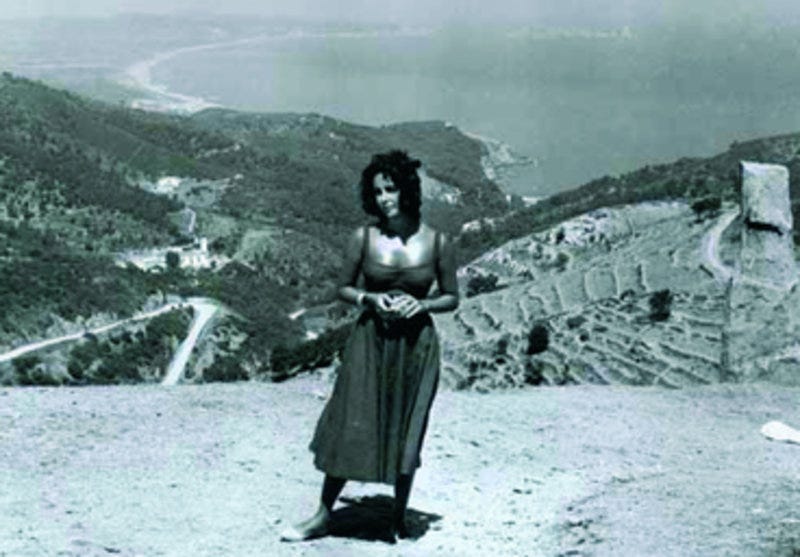
Begur is a stunning mediaeval town, beautifully preserved. Elizabeth Taylor, Montgomery Clift and Katharine Hepburn came here in 1958 to film Suddenly Last Summer. In my house, I have a photo of her near the hilltop castle that dominates the town. It was taken by Josep Carreras – his grandson Maties still runs a photography shop near the square. Josep’s photos bring to mind an old Begur of unpaved streets that predates the arrival of tourists. It seems a long time ago, but in the grand scheme of things it’s recent history.
When walking through the warren of little lanes in Begur, I like to look for hints of the Moorish past. There’s not quite as many as in nearby Pals, but they are there if you know where to look. The shape of an archway, the hint of Arabic writing on weathered stone, tiny Islamic idiosyncracies melded with more recent architectural design. The little remnants of the Moorish past seem ancient today, but they were once the paraphernalia of modernity. They’re a direct conduit between the present and a time before 1492 when Spain was arguably the most modern place on earth.
In 711 AD an African army, under their commander Tariq ibn-Ziyad, crossed the Strait of Gibraltar and invaded ‘Andalus’ – the Iberian peninsula. They would stay for nearly eight centuries. Their empire stretched from Malaga to the Pyrenees and included present day Portugal. The late historian Basil Davidson, who was instrumental in resurrecting African history, wrote of Moorish Spain that there was no place ‘more admired by its neighbours, or more comfortable to live in, than the rich African civilization which took shape in Spain’. It had all the characteristics of what we now call a modern state – a single language, a state religion, public services, a well-organised government. The Moors were also models of religious tolerance; Muslim, Christian and Jew lived together in harmony, or convivencia.
The Moors brought algebra, chemistry, physics, geometry, astronomy and philosophy to Andalus. At a time when over 90 per cent of the people in Europe couldn’t read, education in Moorish Spain was universal – and free. The Moors built seventeen universities and over seventy public libraries. Córdova was the most modern city in Europe, with well-paved streets and raised sidewalks for pedestrians. Ten miles of streets were well illuminated by lamps at night – hundreds of years before paved roads or street lamps appeared in London or Paris. Moorish cities were also unusually clean, with an army of sweepers constantly on patrol. Cordova had 900 public baths.
But all things must pass, even civilisations as great as this. By the time the Nasrid dynasty emerged in 1237, that glorious Moorish empire had begun a slow decline. The Nasrid clan was a feuding, cantankerous family, short on filial loyalty and inclined to violence when disputes over the line of succession arose. Sultans came and went at a dizzying pace as nephews fought uncles and fathers sons, all competing over a steadily shrinking empire. Amidst this turmoil, the humane values that had once characterised Moorish Spain began to evaporate.
Nasrid fortunes were further imperilled by the marriage of Ferdinand of Aragon to Isabella of Castille in 1469. When their respective grandfathers died ten years later, the two kingdoms were united and a powerful Christian nation emerged. Ferdinand was the model of the Machiavellian prince – a man whose avuncular nature camouflaged ruthless ambition and devious intent. He and Isabella were bent on eradicating the last Muslim influences in Spain, an ambition that had the blessing of Pope Julius II.
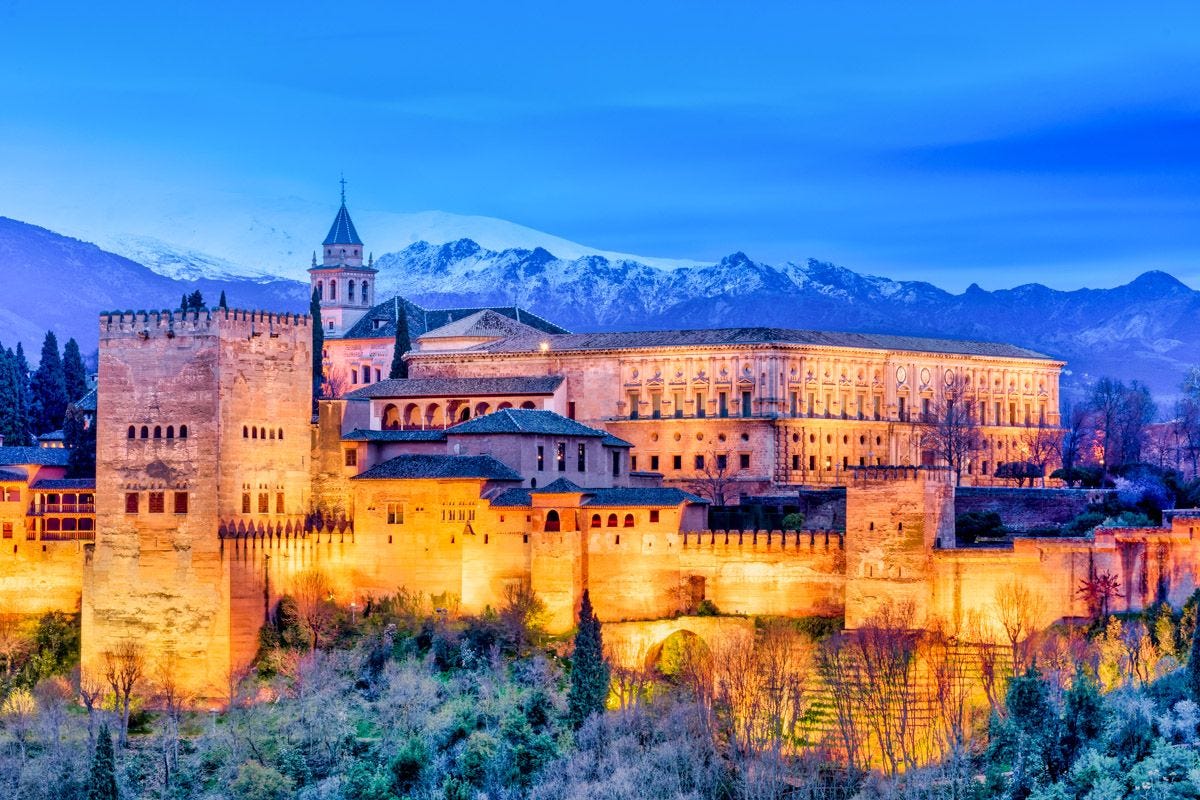
Boabdil, who became the last Sultan in 1482, was keen to resist Ferdinand’s aggression, but painfully aware of the futility of doing so. By this stage, Moorish Spain had shrunk to an enclave around Granada and was no match for Aragon and Castile. Boabdil’s fortunes plummeted further when he was captured by Ferdinand in 1583 and forced to bargain with his nemesis in order to secure release. He became, in effect, a vassal of Ferdinand, who kept Boabdil’s son Ahmed hostage for the next nine years to ensure compliance.
Among the Moors, Boabdil henceforth became the scapegoat for Nasrid weakness. Their feuding made Ferdinand’s task even easier. He was a brilliant military strategist, but also a very patient one. Towns and villages in al-Andalus were methodically captured until, by 1491, Ferdinand’s troops were in sight of Granada. Rather than meet the Moors head-on, he preferred to starve them into submission, destroying the crops in the fields surrounding Granada. Worried that his troops might become vulnerable as winter approached, he built a new town to provide them accommodation. Villages further away were razed to build Santa Fe, erected in just eleven weeks from recycled masonry.
Boabdil was inclined to negotiate, but many of his compatriots preferred to fight. Among them was Ibrahim al-Jarbi, a holy man from Tunisia, who decided to assassinate Ferdinand and Isabella. His plot was foiled due to a case of mistaken identity – speaking no Castilian and having no idea what the king and queen looked like, he attacked the first well-dressed couple he encountered. After stabbing the wrong people, al-Jarbi was overpowered and hacked to pieces. His body parts were then hurled back at the Moors using a siege catapult. By this stage in thrall to martyrs (even rather silly ones), the Moors sewed al-Jarbi back together with silk thread and gave him a sacred burial.
There were many like al-Jarbi, but few like Boabdil. His is the tragic story of a refined young sultan who had the courage not to fight, a man scorned for his refusal to embrace futility. There’s an intriguing immediacy to these events that happened over 500 years ago. The historian Elizabeth Drayson sees Boabdil as ‘a last stand against religious intolerance, fanatical power and cultural ignorance’, a poignant lesson about ‘violence and prejudice between Muslims and Christians’. I’m inclined to agree. So much of the tragedy in today’s world arises from fighting over pathetic conceptions of the past.
As far as dynasties go, the Moorish one in Spain had a good run. Eight hundred years is a long time. But then it all came to an end. On 2 January 1492, Boabdil handed the keys of the Moorish capital to King Ferdinand and Queen Isabella. ‘These are the keys of paradise’, he said. The carefully choreographed event symbolised the epochal transformation of Granada from Islamic state to Christian possession.
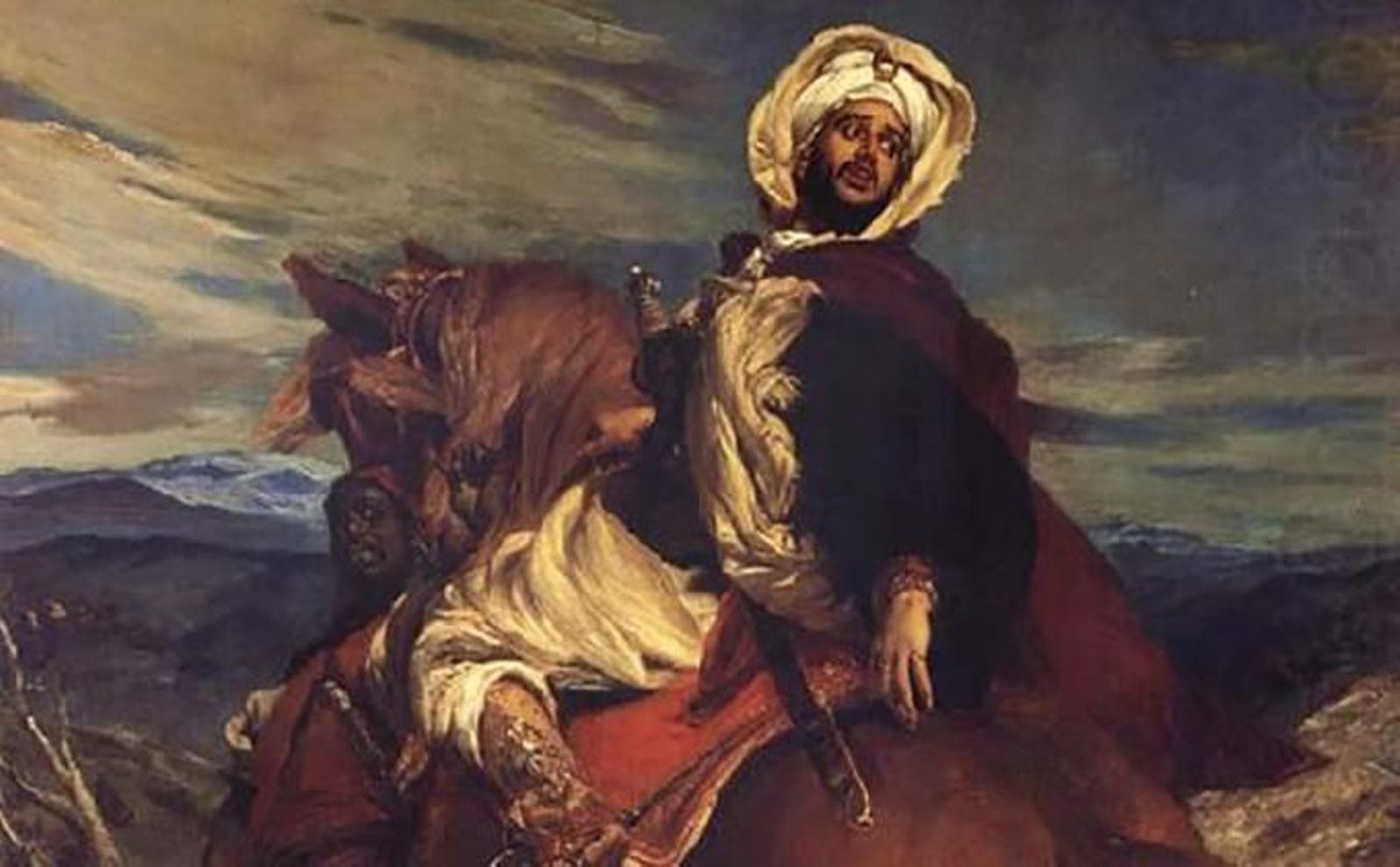
Shortly afterwards, Boabdil departed the city with his mother Aixa. On reaching Padul, the furthest point from which Granada can still be seen, he turned towards his former home, sighed heavily and burst into tears. His mother, who was not a very nice person, spat: ‘You do well, my son, to cry like a woman for what you couldn’t defend like a man.’
How should we judge the tears of a sultan? The incident of the Last Sigh has often been used to demonise Boabdil. Heroes, apparently, are not supposed to cry. The consensus of opinion agrees with Aixa, casting her son as weakling, coward or traitor. In truth, that incident at Padul was probably mere invention – a fabricated denouement to a preconceived tale of humiliation. Boabdil’s reputation has been manipulated to suit the message that chroniclers have wanted to convey.
Ignominy is often inversely proportional to glory – the higher one reaches, the further one falls. But Drayson insists that Boabdil was a hero. His heroism lies in his recognition of reality – he accepted the passage of time, rather than fighting against it. By recognising the futility of resistance, he saved his people from slaughter and starvation at the hands of their Christian conquerors. He willingly colluded with Ferdinand and Isabella to secure the best possible terms of surrender. He saw no glory in annihilation, no virtue in martyrdom. Boabdil willingly sacrificed his own reputation so that his people could survive. In today’s warped world, that seems perhaps strange.
The conquest of the Moors is often carelessly labelled progress. Yet to do so is to adopt the prejudice of the early Christians who believed that Muslims were violent brutes, the direct descendants of the murderer Cain. Boabdil, however, contradicted that careless stereotype. He perceived no virtue in violence. His demise was more calamity than good fortune. The year 1492 is generally seen as a beginning. We should, however, spare a thought for what ended.
But look closely and you’ll notice that the remnants of a great civilisation are all around us – certainly in beautiful Begur.
This is fascinating and timely (for me) -- we're going to be in Manresa in two weeks. I've never been there -- most of my time in Spain has been in Andalucia. I lived in Rota when I was a kid (near Cadiz). Love expanding my knowledge of Spain's vast history. Thanks for the insight!