
Cuba, Again
It's deja vu all over again in the land of sugar and cigars

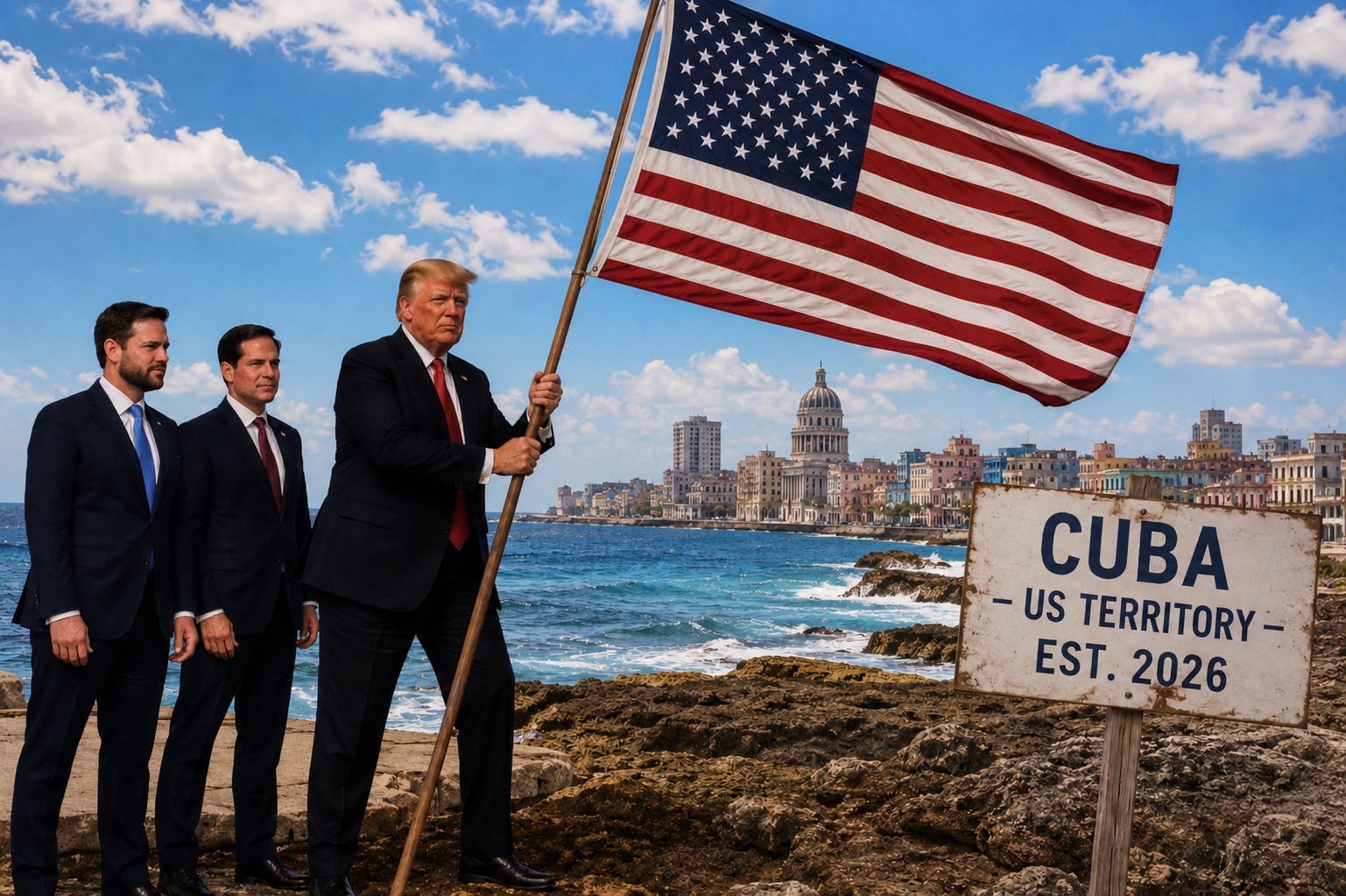
Cuba has been in the news a lot lately, thanks to Donald Trump. He’s a child of the 60s – though not in the way we usually think. A lot of Americans who grew up during that decade remain obsessed with Cuba; it’s seared into their synapses, thanks to the humiliation of the Bay of Pigs, the horror of the Cuban Missile Crisis and the annoying tendency of Fidel Castro to frustrate American presidents up until his death in 2016. Most Americans were able to get over those issues and move on, but there’s always been a significant number, like Trump, for whom Cuba has had a sirenic quality. They despise Cuba, but also desperately want to possess it.
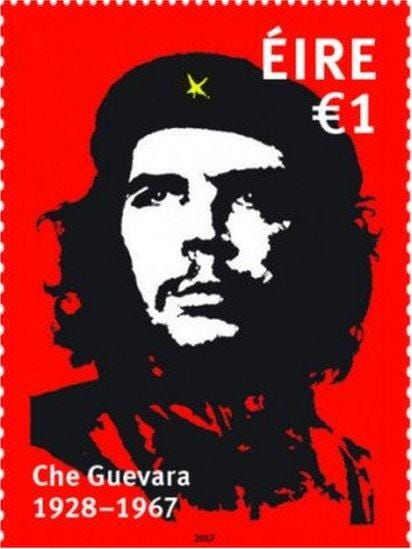
The trouble started on New Year’s Day 1959, when rebel forces under Castro completed the overthrow of the widely reviled Cuban dictator Fulgencio Batista, a friend of the United States. For those sympathetic to Castro and his sidekick Ernesto Che Guevara, that uprising seemed the perfect example of a peasant-based revolution. Chronicles of the campaign would in time become required reading for left-wing students around the world. That famous photo of Che remains popular among teenagers today, but more because he seems cool than because he was a communist.
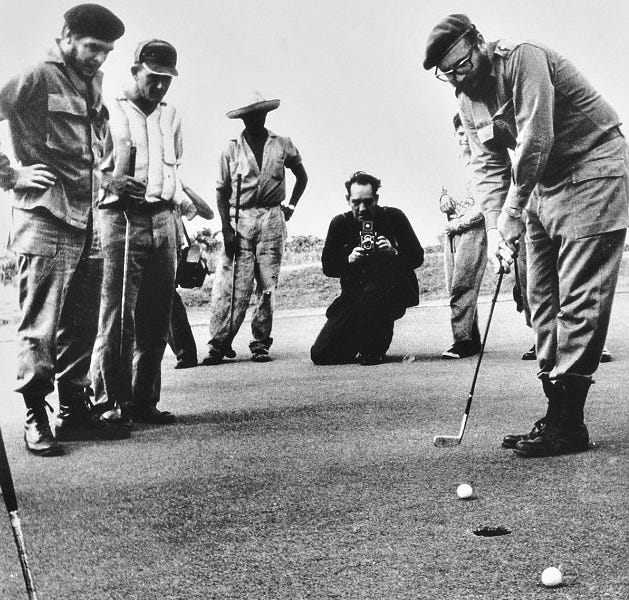
For the American government, however, Castro was a nightmare. He didn’t at first proclaim allegiance to Communism, instead presenting himself as a radical socialist and nationalist. Immediately after the revolution he still hoped for peaceful coexistence with the United States because he knew precisely how dependent his country was upon America — for aid, investment and trade. But he insisted that the relationship should be on his terms, and should not compromise the revolution. Before long, the Eisenhower administration decided that Castro’s terms were incompatible with the maintenance of American business interests on the island. No surprise there: neo-colonialists are never very keen on socialists who want to share the wealth.
As the relationship grew increasingly frosty, Castro turned toward the Soviets, who were only too happy to gain a foothold in a country so close to the United States. Meanwhile, wealthy Cubans left the country in droves, taking their money with them. Facing total economic collapse, Castro began an ambitious programme of nationalisation, which directly threatened American companies, particularly those trading in sugar and tobacco. This was around the time when American addiction to Coca Cola (and those other soft drinks) took off, causing the consumption of sugar in the United States to rise exponentially. An obesity epidemic was just around the corner.
Keen to protect American business interests, Eisenhower began plotting an overthrow. Since the US could not be seen to be interfering in the domestic politics of a sovereign country, the task of toppling Castro fell to the spooks at the CIA. The agency assumed that the raw material for a coup could easily be found, given the number of Cuban exiles in America who wanted to reclaim their country, among them Mario and Oriales Rubio, the parents of the current American Secretary of State. On 17 March 1960, Eisenhower approved a CIA memo entitled ‘A Program of Covert Action Against the Castro Regime’. The objective, clearly stated, was to replace Castro with a regime ‘more devoted to the interests of the Cuban people and more acceptable to the US’ but also ‘to avoid the appearance of US intervention’. That’s a tall order.
For the CIA, Cuba became a sacred vocation; agents displayed the zeal of missionaries. Convinced that Castro was deeply unpopular, they assured themselves that fomenting a coup would be a piece of cake. Confidence was buttressed by the successful overthrow of the leftwing government of Jacobo Arbenz in Guatemala in 1954, and his replacement by Carlos Castillo Armas, essentially an American puppet. The agency was confident that it could make Cuba a carbon copy of Guatemala.
CIA preparations gathered pace while Richard Nixon and John Kennedy were battling for the presidency in 1960. Both candidates agreed on the need to get rid of Castro. As Vice President, Nixon had, in fact, been one of the main sponsors of the CIA plan. But the idea also suited Kennedy’s aggressive foreign policy. He disagreed with Eisenhower’s reliance upon nuclear deterrence and preferred instead a strategy of ‘flexible response’ in which military and political options would be carefully tailored to each foreign challenge. That strategy implied teaching American soldiers how to fight in difficult places like Cuba.
By the time of Kennedy’s inauguration, plans were essentially set in stone. In his inaugural address, he had famously proclaimed: ‘Let every nation know, whether it wishes us well or ill, that we shall pay any price, bear any burden, meet any hardship, support any friend, oppose any foe to assure the survival and success of liberty.’ Cuba seemed the perfect place to demonstrate that commitment.
Delighted by Kennedy’s gung-ho attitude, the CIA pulled together a brigade of 1,400 Cuban exiles who were trained in Guatemala. Spies and saboteurs were already in Cuba preparing the ground. In addition, exiled pilots were taught to fly B-26B light bombers which would take out Castro’s small air force in the first few minutes of the conflict. When CIA agents presented the plan to Kennedy, they brought maps with big, thick arrows extending directly from the Bay of Pigs (the preferred landing place) to Havana. They spoke loudly, puffed their chests like prize cockerels and exuded infectious confidence. There was a carnival atmosphere in the Oval Office.
Secretary of State Dean Rusk recalled: ‘The CIA told us … that elements of the Cuban armed forces would defect and join the brigade, that there would be popular uprisings throughout Cuba when the brigade hit the beach, and that if the exile force got into trouble, its members would simply melt into the countryside and become guerrillas, just as Castro had done.’ White House officials felt deep misgivings, but found it difficult to withstand this tidal wave of confidence. ‘[I] did not serve President Kennedy very well’, Rusk later admitted. ‘I should have made my opposition clear in the meetings themselves because he [Kennedy] was under pressure from those who wanted to proceed.’ Well, yes that’s true, but Kennedy was also enormously keen on the idea of big victory over communists in a place so dear to American hearts.
Military planners fully accepted that a force of 1,400 soldiers could not hope to defeat Castro’s army on its own. But that didn’t matter, since it was presumed that the invasion would spark a general uprising. Arms sufficient to equip 30,000 rebels were stockpiled. General David Shoup, commandant of the Marine Corps, recalled that ‘the intelligence indicated that there were quite a number of people … ready to join in the fight against Castro … My understanding was that the … people were just waiting for these arms and equipment.’ Rusk later admitted that ‘the uprising was utterly essential to success’.
The CIA’s confidence was not unanimous. The maverick agent E. Howard Hunt, later the notorious chief planner of the Watergate break-in, had played a prominent part in the Guatemalan operation. A visit to Cuba convinced him that this was an entirely different affair. ‘All I could find was a lot of enthusiasm for Fidel Castro’, he recalled.
this was … a much larger body of land, an entrenched, well-trained, devoted communist group of followers of Castro—and the kind of psychological warfare we were able to run against Castro was insignificant … Castro was secure, and he was beloved by millions in Cuba … So, instead of our having a problem such as we had in Guatemala, of using less than 200 locals to overthrow a government, we were faced with a Cuban army, a Cuban militia, a loyal population—loyal to Castro, that is.
On his return, Hunt insisted upon a number of contingencies being satisfied prior to invasion, one of which was that ‘Castro would have to be neutralized’ – in other words, assassinated. Over subsequent months, he was shocked to find that nothing was done to satisfy that requirement. ‘Is anybody going after Castro? Are you going to get rid of him?’, he kept asking. ‘”It’s in good hands,” was the answer I got, which was a great bureaucratic answer.’
Hunt’s caution contrasted sharply with the optimism apparent in intelligence reports just prior to the invasion. They maintained that ‘the Castro regime is steadily losing popularity’ and that ‘disenchantment of the masses has spread through all the provinces’. Resistance to the invasion was likely to be low, because ‘it is generally believed that the Cuban Army has been successfully penetrated by opposition groups and that it will not fight in the event of a showdown’. The agency was confident that ‘The great mass of Cuban people believe that the hour of decision is at hand and that the survival of the CASTRO regime is in balance.’
Let me pause a minute here and stress that there was absolutely no evidence to back up these assumptions. But that’s what happens when people in power get obsessed with the idea of regime change. The wish becomes the father of the thought.
Meanwhile, the Castro government remained quietly confident. On 14 April, S. Kudryavtsev, the Soviet ambassador to Cuba, recounted a meeting with Che:
Guevara said that the situation remained quite tense, although he personally believes that … given the presence of large contingents of well-armed people’s militia and the revolutionary army, an operation of deploying paratroopers, even numbering several thousand troops, would be doomed to failure. Therefore … it is unlikely that the forces of external counterrevolution would undertake such a risk now, knowing that it would be senseless to count on any kind of extensive internal uprisings in Cuba.
Che was right about the strength of his forces and the support of his people. He was, however, hopelessly wrong in his assessment of the rationality of the exile army or, for that matter, of the Kennedy administration. Like a teenager buying his first car, Kennedy had bought himself a war without bothering to look under the hood. He was, however, still determined to maintain the pretence of detachment. Shortly before the invasion, he openly boasted: ‘We can be proud that the United States is not using its muscle against a small country’. Everyone understood which small country he meant.
On the morning of 15 April, B-26B bombers flown by exile pilots from a Nicaraguan airfield and cleverly painted with the colours of the Fuerza Aerea Revolucionaria (the Cuban Air Force), attacked three airbases in Cuba. The planes scored some hits but didn’t come close to destroying Castro’s air power, since he knew what was coming and had moved his planes to safety.
The CIA wanted the world to believe that dissidents within the FAR had carried out the attacks. The ruse fooled Adlai Stevenson, US Ambassador to the United Nations, but almost no one else. Later that day, he vehemently maintained that allegations that the US was behind the air strikes were ‘without foundation’. The planes, he insisted, ‘were [from] Castro’s own air force … and … they took off from Castro’s own air force fields’. David Phillips, the CIA’s propaganda chief, was horrified. ‘As I watched Stevenson defend the deceitful scheme a chill moved through my body. What had we done? Adlai Stevenson had been taken in by the hoax! Had no one bothered to tell our Ambassador at the United Nations of the deception?’
On 17 April the invasion went forward. The CIA had originally wanted an airborne landing, but, according to Hunt, this was vetoed by Rusk who feared it would be ‘too obviously American’. Planners therefore settled on a seaborne landing at the Bay of Pigs. The bay is located on a desolate stretch of the Cuban coast, far from centres of population. Mosquito-infested swamps surround the small beach. The coastal area then quickly turns hilly, making passage into the interior difficult. In other words, it’s a terrible place to stage an invasion. The surrounding high ground offered Castro’s forces plenty of places from which to pour murderous fire onto the tiny beachhead. It was like shooting fish in a barrel.
To make matters worse, Kennedy decided against continuing the air strikes on the day of the invasion. That decision might have been motivated by his desire for plausible deniability, even though American involvement was obvious to virtually everyone by this stage. On the other hand, the White House might already have realised that the plan was doomed and Kennedy had decided to cut his losses.
The lack of air cover offered plenty of scope for those who later sought scapegoats, but in truth it made no difference to the end result. A small force of 1,400 men landing on a remote beachhead with light equipment was always doomed to fail against a force of 30,000 Cuban professional soldiers, generously supplied with Russian tanks and heavy artillery. Within seconds of landing, the exile force was cut to pieces. Out in the bay, one of the supply ships was destroyed by air attack, prompting the others to retreat.
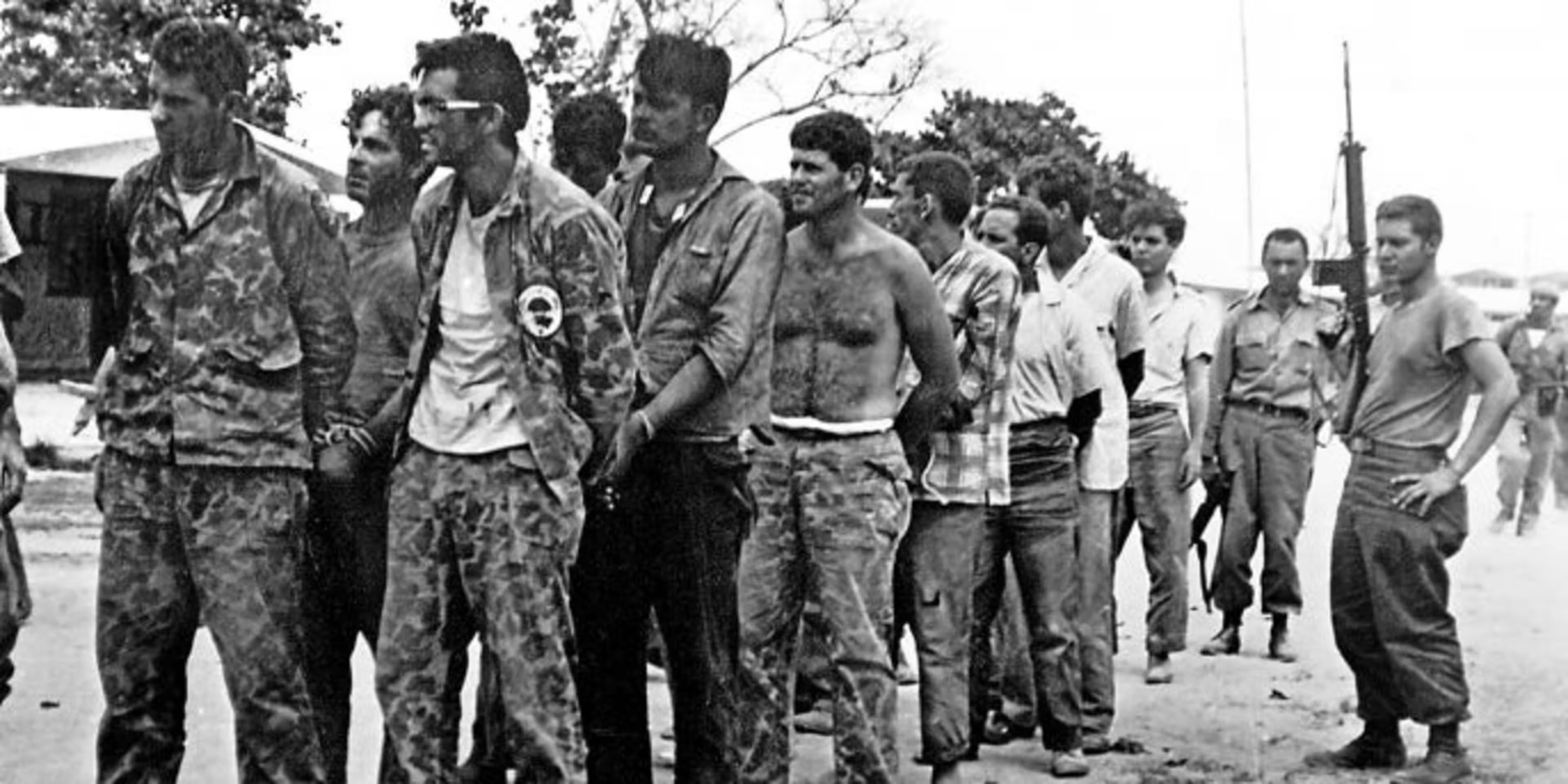
‘We are out of ammo and fighting on the beach’ a brigade commander moaned. ‘Please send help.’ A short time later came an even more desperate message: ‘In water. Out of ammo. Enemy closing in. Help must arrive in next hour.’ The exiles had been led to believe that US marines would reinforce them, but that was another of the CIA’s little fibs. By the time the battlefield went quiet on 21 April, 114 exiles were dead and 1,189 captured. A few dozen managed to escape back to the ships.
‘This was a struggle of Cuban patriots against a Cuban dictator’, Kennedy proclaimed on the 20th. ‘While we could not be expected to hide our sympathies, we made it repeatedly clear that the armed forces of this country would not intervene in any way.’ Rusk called it a minor operation by ‘a group of courageous men who returned to Cuba determined to do what they could to assist the people in establishing freedom’.
Hypocritical platitudes, however, provided no shield against recrimination. Among the immediate casualties of this utterly stupid venture were CIA director Dulles and deputy director Charles Cabell. An internal inquiry was immediately commissioned to discover how the agency could have been so hopelessly misguided. Its conclusions were so damning that the report was embargoed and all but one copy destroyed. Efforts to release it under the Freedom of Information Act were vigorously opposed until 1998.
When it was finally released, the report revealed a catalogue of CIA mistakes, misassumptions, artifice and incompetence. Almost none of the agents spoke Spanish, which left them vulnerable to highly biased reports from interpreters. The budget, which started out at $4.4 million, had quickly rocketed to $46 million within a year. Agency officials treated exiles ‘like dirt’, leaving them ‘wondering what kind of Cuban future they were fighting for’. The Revolutionary Council, a CIA-inspired alternative to the Castro government, was treated like ‘puppets’ by the agency, and given no say in planning the invasion.
‘This operation took on a life of its own’, the report argued. ‘The agency was going forward without knowing precisely what it was doing’. As for the matter of a general uprising, the report revealed that there was ‘no intelligence evidence that Cubans in significant numbers could or would join the invaders or that there was any kind of an effective and cohesive resistance movement’. Finally, ‘plausible denial was a pathetic illusion’.
The most striking feature of that report is the sense of incredulity over the fact that the agency could have been so hopelessly wrong on so many counts. These were supposed to be smart men — the best and the brightest. Kennedy remained suspicious of the CIA for the rest of his presidency, which was perhaps the only good thing to come out of this fiasco.
Nevertheless, neither the CIA nor the Kennedy administration gave up on the idea of regime change; both continued to look for other ways to foment a coup. On 16 March 1962, the counter-insurgency specialist Edward Lansdale advised the administration on the possibility of toppling Castro. The mood was still upbeat. ‘I remarked that the thesis of creating a revolution inside Cuba looked just as valid as ever’, Lansdale recorded. ‘CIA professionals were now agreeing more and more that … the possibility of fracturing the regime pointed to some real opportunities.’
Meanwhile, General Lyman Lemnitzer, Chairman of the Joint Chiefs of Staff, raised various possibilities for overt military action. He revealed that the military ‘had plans for creating plausible pretexts to use force, with the pretexts being either attacks on US aircraft or a Cuban action in Latin America for which we would retaliate’. One idea involved a re-run of the sinking of the Maine: ‘We could blow up a US warship in Guantanamo Bay and blame Cuba’. Another possibility was to ‘develop a communist Cuban terror campaign in the Miami area, in other Florida cities and even in Washington … The terror campaign could be pointed at Cuban refugees seeking haven in the United States. We could sink a boatload of Cubans en route to Florida (real or simulated).’ Another cunning plan, dubbed ‘Operation Dirty Trick’, involved blaming the Cubans if the flight of astronaut John Glenn ended in disaster. Don’t ask me how that scenario was supposed to work.
A simultaneous exploration of possibilities for eliminating Castro himself was overseen by Attorney General Robert Kennedy, supposedly the good guy in his brother’s administration. Codenamed ‘Operation Mongoose’, representatives from the military and the intelligence community periodically discussed alternatives. Imagination ran wild. ‘Operation Good Times’ involved faking a picture of a half-naked, obese Castro surrounded by two voluptuous beauties ‘and a table brimming over with the most delectable Cuban food’. The photo would carry the caption ‘my ration is different’.
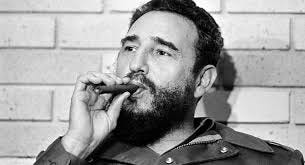
Dirty tricks specialists also suggested, among other things, giving a poisoned scuba suit to Castro through a third party, sneaking him a poisoned pen, placing exploding sea shells on the beach where he swam and providing him with exploding cigars. One of the best ideas was to doctor his shampoo so that his hair and beard would fall out. ‘This was a bright idea’, one CIA agent recalled. ‘The Cuban people would fall all over laughing at him and he would be ridiculed.’ According to a JCS memo of 13 March 1962 some of these ideas were endorsed as ‘suitable for planning purposes’. Robert Kennedy enthusiastically endorsed the ideas.
In response to Operation Mongoose, the Soviets decided in 1962 to place medium range atomic missiles in Cuba, as a deterrent against US aggression. And we all know where that led …
Over the years, attempts have been made to deflect blame from Kennedy by arguing that the idiotic Bay of Pigs plan was Eisenhower’s idea. But Kennedy could have cancelled the operation at any time up to the 15th of April. He didn’t do so because it harmonised so well with his determination to ‘pay any price’ and ‘bear any burden’ in the fight against communism. In going ahead, he got the worst of all possible worlds. He had demonstrated that the US was perfectly willing to remove a leader it didn’t like, no matter how popular that leader might have been among his people. More importantly, he had also demonstrated that there were limits to American commitment, in other words, that the US would not pay any price. Kennedy had managed the double feat of alienating his friends and angering his enemies. Sound familiar?
Fast forward to 2026. Like the serial abuser that he is, Trump has been trolling Cuba in the same way that he’s been trolling Canada and Greenland, constantly threatening to take a place that he covets. Lately he’s been joking that his forces might just take Cuba on their way back from Iran. Haha.
I’m not sure if what I’ve written about the Bay of Pigs fiasco is relevant to what’s happening today, but so much of what Trump and Rubio are saying echoes what Kennedy, Rusk and Dulles said back in 1961. There’s the same insistence that the Cuban people are desperate for regime change, the same belief that toppling the Cuban government will be a piece of cake. Those assumptions were dangerously deluded in 1961 but, hey, who knows, maybe they’re justified today. I really don’t know enough about the internal politics of Cuba to make a confident prediction.
But I would still like to offer a few little warnings, based on what I do know about Cuban history. Here they are as neat little bullet points:
Kennedy’s cabinet was one of the most intelligent in American history. They were called, with good reason, ‘The Best and the Brightest’. Yet they still managed to be led astray by the obsessive desire to destroy communism in Cuba.
Now think about the Trump cabinet, arguably the stupidest in history. Even if there is a genuine opportunity for regime change, don’t underestimate the ability of Trump, Rubio, Hegseth and their ilk to make a mess of things.
I suspect that the Cuban people do want rid of their regime, which is both incompetent and cruel. Those with a long memory would probably like a return to the early Castro years when there was a fair distribution of resources and Cuba’s education and healthcare systems were arguably better than those of the United States. I don’t get the feeling that Trump wants to make life better for the Cuban people. He wants to make Cuba an easier place for his oligarchs to exploit.
In other words, a desire for regime change does not mean a willingness to welcome American interference in Cuban affairs. The Cubans don’t trust America, for good reason. Ever since the revolution, the Americans have done everything they could to make Cuba suffer, in order to undermine the regime.
So, I doubt that an American invasion will be welcomed by the Cubans.
I’m quite certain that Cuba’s current military pales in comparison to Castro’s highly trained force that roundly defeated the American-backed insurgents at the Bay of Pigs in 1961. Trump might indeed be able to overwhelm the Cuban military in a matter of hours, as happened in Venezuela. But then what? He hasn’t so far inspired confidence in his ability to establish genuine regime change by investing the time and effort necessary to build a stable government. He doesn’t seem remotely interested in issues of that complexity. He just wants to possess.
So is this deja vu all over again? I fear that it is. The rhetoric coming out of Washington today sounds too much like what was said back in the early 1960s. There’s that same supreme confidence, that same deep ignorance of Cuban affairs. Obsession is the enemy of intelligence; politicians do very stupid things in pursuit of what appear to be noble goals.
But, hey, maybe everything will be different this time around. Maybe Trump will be the first American president to do good things for Cuba. Wouldn’t that be a nice surprise? And pigs might fly.
I write because I love the harmony of words. But it’s also my main source of income. So, if you enjoyed this, consider becoming a paid subscriber, or you can …
Thanks. I sometimes think that he can't possibly be so stupid as to try to take Cuba but of course he's that stupid. Trying to justify it will, however, be difficult.
As for Duck and Cover and our old friend Bert the Turtle, I wrote a book about the Bomb and devoted a chapter to the whole charade of civil defense. Someday I'll post a condensed version of that here. It's fascinating but also hilariously funny.
Thanks. Yes, that's exactly his intention.