
How Do You Solve a Problem Like Maria?
Sex and murder in a 19th century Italian convent

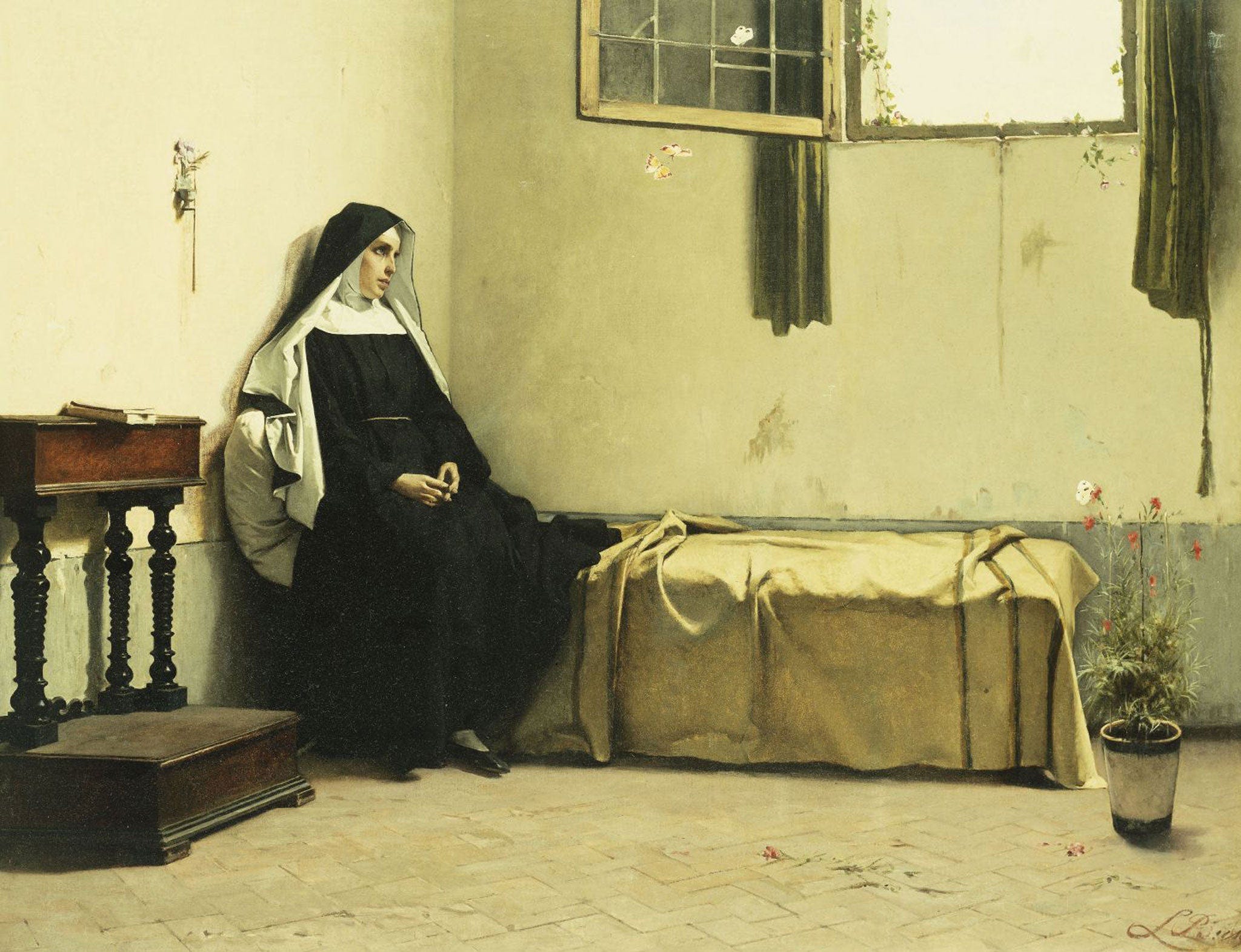
It’s Saturday, when I dig through my digital archives for a review of a book that hit me hard. Today I’m going back to a book from 2015, that I reviewed for the Washington Post. Herbert Wolf, a German academic, stumbled on the story of the nuns of Sant’Ambrogio accidentally, while digging through the Vatican archives. The book is perhaps longer than it needs to be and less dramatic than I’d hoped, but I suppose that’s what often happens when a good story ends up in the hands of overly serious academic historian. Still, it’s worth sticking with this book, because the story itself is astonishing.
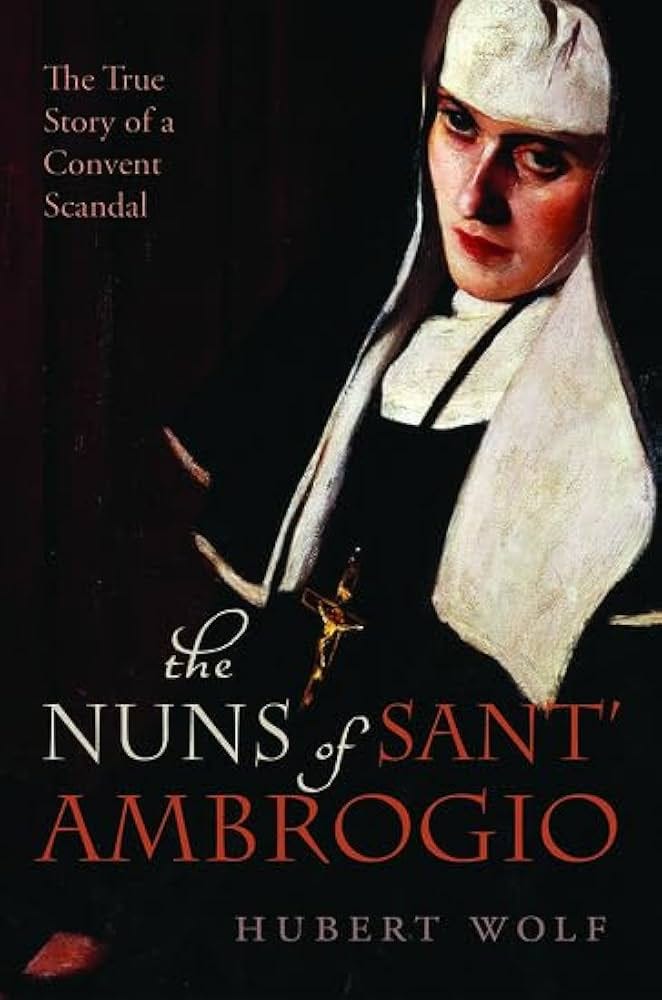
Hubert Wolf, The Nuns of Sant’Ambrogio: The True Story of a Convent in Scandal, (Oxford University Press, 2015)
How do you solve a problem like Maria?
Sister Maria Luisa was the novice mistress at Sant’Ambrogio convent in Rome. She was intelligent, charismatic and stunningly beautiful. She was also a sociopath, embezzler, false saint, sexual predator, pathological liar and murderer.
Had her crimes been committed outside the convent, the problem would have been easily solved. Maria Luisa would have been arrested, tried and quickly executed. But she was a nun, which meant that the real problem was not the victims she raped and murdered, but the threat she posed to the Catholic Church.
The jacket of The Nuns of Sant’Ambrogio promises an “incredible story of how one woman was able to perpetrate deception, heresy, seduction and murder in the heart of the Church itself.” Given that jackets are designed to sell books, the hyperbole is entirely understandable. In fact, however, this astonishing book is much more than a true crime thriller about murderous lesbian nuns. It’s also a very serious study of how the Church deals with scandal. As Hubert Wolf points out, we aren’t supposed to know about this story.
The scandal begins with Maria Agnese Firrao, a manipulative tyrant who founded the convent in 1806. She was a seriously disturbed woman who used lesbian initiation rites to cast a spell over novice nuns. Bleeding stigmata on her hands, feet and breasts were supposedly evidence of her saintliness. In addition, she often wore an iron mask pierced with nails and once trapped her tongue under a heavy stone, presumably to demonstrate that she was incapable of blasphemy or falsehood. When the Vatican, alarmed by her “false holiness”, investigated, evidence emerged of “lasciviousness and carnality with demons”. That was Church-speak for a long affair with a priest, which had resulted in two abortions.
Firrao was subsequently removed and sent to a closed convent in Gubbio. Such was her power, however, that she continued to exert control over Sant’Ambrogio through the deep reverence she had cultivated. As a result, the ethos she had carefully established continued long after her departure. That explains why Maria Luisa was subjected to the same lesbian initiation rites soon after she entered the convent at age 13. Persuaded to perform oral sex on the new Abbess Maddalena, she was told “that I should have no fear: this was not a sin, but a holy thing and a gift from God”.
The ambitious Maria Luisa rose quickly within the convent. Very soon, the abused became an abuser more catholic in her criminality than her predecessors. She used her beauty and charm to dominate those around her, convincing them that she had a direct line to heaven. Forged letters purportedly from the Virgin Mary directed both nuns and priests to have sex with Maria Luisa, for purposes of purification. Ornate rings, supposedly gifts from God, were bought with money embezzled from the convent’s legacy. Three nuns who refused to bend to her will were murdered, their deaths presented as evidence of God’s desire to cleanse the convent.
Maria Luisa’s tyrannical control might have continued undetected if not for the arrival in September 1858 of Princess Katharina von Hohenzollern-Sigmaringen, a devout German aristocrat. Though at first delighted to escape her shallow patrician luxury, Katharina soon discovered that the convent was a den of vice. Matters reached a head when she was asked to translate a letter from a certain Pietro the Americano, which turned out to be a catalogue of his perverted fantasies. Immune to Maria Luisa’s charms, Katarina revolted.
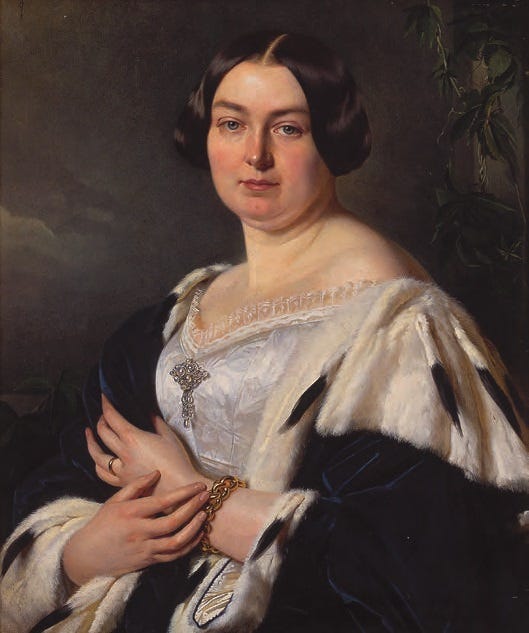
Maria Luisa, coveting Katharina’s immense wealth, could not afford to let the princess become a whistleblower. She therefore had to die – quickly. Over the course of a week, Katharina was fed opium, belladonna, alum, turpentine and various other poisons. Much to Maria Luisa’s dismay, however, she refused to die. She eventually managed to escape and, through her aristocratic connections, made allegations of false holiness, sexual perversion and murder within the convent. The Church was at first inclined to dismiss Katharina as a lunatic, but a lengthy investigation and trial eventually revealed that the scandal went much deeper than even the princess understood.
Wolf, a professor of ecclesiastical history at the University of Muenster, reconstructs this incredible story from Inquisition transcripts remarkably lurid in their detail. A less principled author would have turned this into a tale of naughty nuns and perverted priests, given it a racy cover and watched the royalties roll in. Wolf is, however, a scholar of immense integrity who realises that this story does not require much in the way of embellishment.
He’s also keen to show what Sant’Ambrogio reveals about how the Vatican deals with scandal. In this case, senior church figures who had “venerated [Maria Luisa] as a living saint, now dropped her like a hot potato. … Their claims chimed with contemporary clichés about women: what else could one expect from the weaker sex, the daughters of Eve, who were so easily seduced by evil and then seduced men in turn?”
The Vatican investigation was brutally thorough but even more so was the subsequent cover-up. This case was never supposed to see the light of day. Wolf only found the Sant’Ambrogio records because they had apparently been misfiled. That raises an interesting question relevant to the Church of today: are there similar scandals that have been more carefully buried? Wolf, satisfied with telling this one perfect story, doesn’t speculate. Yet the conspiracy he describes does suggest that the Vatican is disturbingly proficient at solving problems like Maria.
Great story. One wonders about the centuries of “secrets” to be found in the Vatican archives.
😳😳😳